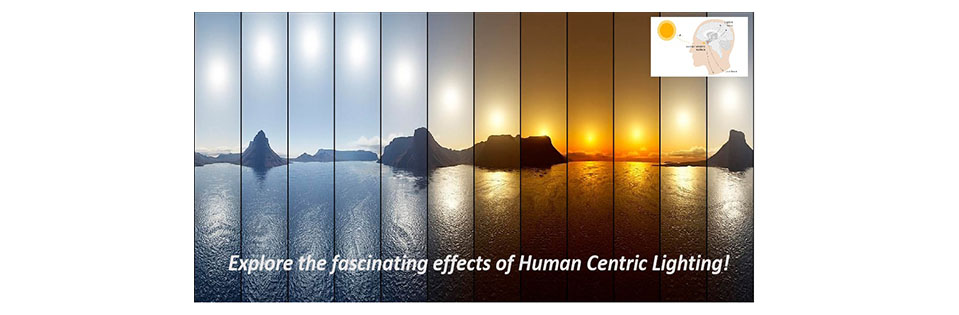
A frequently asked question relates to the superiority of LED light compared to other light sources. LED lighting shines supreme thanks to unmatched efficiency, longevity, and versatility. On average, LED light uses 75-90% less energy than incandescents while lasting 25-50 times longer with a lifespan of up to 50,000 hours. LEDs do not heat up as other light sources do and therefore minimize the risk of fires. The broad colour spectrum of LEDs makes them tunable for colors and can boost human being mood or plant growth.
An LED needs only 9-10W to produce the same brightness (800 lumens) that requires 60W from an incandescent bulb. This means, households replacing halogen lamps with LEDs can save over 2,000 USD over 10 years. For businesses the savings are even more dramatic. A companhy replacing 1,000 inefficient tubes saves approximately 30,000 USD over 10 years. LEDs contain zero mercury, unlike fluorescent and CFL bulbs which require hazardous waste handling. Less heat and lower AC load are other key factors. Because LEDs convert 95% of energy into light (not heat), they reduce the strain on air conditioning systems, indirectly saving even more energy.
It is a widely unknown fun fact that LEDs were born accidentally from radio experiments dating back to 1907, when British whiz Henry Round zapped silicon carbide and saw faint yellow sparks (electroluminescence). However, it took another long decades until 1962 for LEDs to break through with the help of Nick Holonyak.
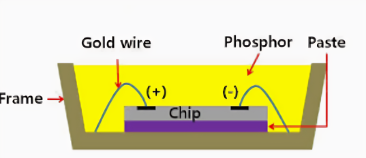
In 1993 the blue LED breakthrough was managed by by Shuji Nakamura from Nichia Corporation. White light was unlocked via phosphor tricks. Early LED bulbs cost as much as 100 USD back in 2002 and meanwhile the cost is reduced to far below one USD. Throught the implementation of LEDs, 1.8 trillion kWh can be saved yearly worldwide.